Trademark Disclaimer:
TRU NIAGEN® and NIAGEN® are registered trademarks of ChromaDex, Inc. These terms are used only to identify the patented ingredient referenced in this article. No affiliation, endorsement, or sponsorship by ChromaDex is implied.
Summary:
In this article, you will learn what nicotinamide riboside is, how it supports healthy NAD+ levels, what current research shows, who may consider it, and how to choose a high-quality NR supplement.
Nicotinamide riboside (NR) has gained increasing attention in recent years for its role in supporting healthy NAD+ levels, cellular energy, and overall metabolic function. As a unique and clinically studied form of vitamin B3, NR offers a highly bioavailable pathway for raising NAD+, a molecule essential for hundreds of biological processes, including energy production, DNA repair, and normal mitochondrial function. Peer-reviewed research continues to explore how NR may help support cellular health, particularly as NAD+ levels naturally decline with age or during periods of physical or metabolic stress.
This article provides a comprehensive, research-backed overview of nicotinamide riboside — how it works, what current studies suggest, who may benefit, and what to consider when evaluating NR supplements. For individuals interested in evidence-based approaches to supporting cellular health, NR is an ingredient worth understanding.
Explore our professional-grade nicotinamide riboside supplements available through our online store.

What Is Nicotinamide Riboside (NR)?
Nicotinamide riboside (NR) is a unique, bioavailable form of vitamin B3 that serves as a direct precursor to NAD+ (nicotinamide adenine dinucleotide). Unlike other B3 derivatives such as niacin or niacinamide, NR enters the NAD+ pathway through a distinct, efficient route that has attracted significant research interest. Although small amounts of NR occur naturally in foods such as milk, supplemental forms provide clinically evaluated levels that are not typically achievable through diet alone.
NR has become a focus within cellular health research because of its potential to support NAD+ levels, a coenzyme essential for cellular energy production, mitochondrial function, and normal metabolic processes. As interest in healthy aging and longevity science grows, NR has emerged as one of the most studied nutritional approaches for supporting the body’s natural energy and repair pathways.
How NR Fits Into the Vitamin B3 Family
Vitamin B3 includes several related compounds: niacin, niacinamide, and nicotinamide riboside – each with different biological properties and tolerability profiles. NR stands out for its ability to enter cells efficiently and convert into NAD+ without causing the flushing commonly associated with niacin. This makes NR particularly appealing for individuals looking to support cellular energy and metabolic function without the discomfort that sometimes accompanies other forms of vitamin B3.
Research also suggests that NR may uniquely activate cellular pathways that contribute to maintaining healthy energy metabolism. While outcomes vary based on individual physiology, NR’s role as a precursor in the NAD+ cycle makes it a promising area of ongoing investigation.
Understanding NIAGEN® as a Patented NR Ingredient
NIAGEN® is a patented form of nicotinamide riboside developed by ChromaDex and used in many professional-grade NR supplements. This ingredient has been evaluated in multiple peer-reviewed human studies examining its safety, bioavailability, and effects on NAD+ levels. Products containing NIAGEN®, such as TRU NIAGEN® formulations, rely on this clinically researched ingredient to support cellular energy and NAD+ metabolism.
Trademark Disclaimer:
TRU NIAGEN® and NIAGEN® are registered trademarks of ChromaDex, Inc. These terms are used only to identify the patented ingredient referenced in this article. No affiliation, endorsement, or sponsorship by ChromaDex is implied.
Why NR Has Become a Focus in Cellular Health Research
Interest in NR has increased significantly as researchers continue to explore the broader role of NAD+ in metabolism, mitochondrial efficiency, and healthy aging. Studies have shown that NAD+ levels naturally decline with age and during periods of physical or metabolic stress, prompting interest in nutritional strategies that support healthy NAD+ production.
NR is appealing because it has been shown in clinical studies to effectively increase NAD+ levels in humans, has a strong safety profile, and is generally well tolerated. As a result, NR is now a key ingredient in many clinician-guided wellness programs aimed at supporting cellular health, vitality, and metabolic balance.

How NAD+ Supports Cellular Energy and Health
NAD+ (nicotinamide adenine dinucleotide) is an essential coenzyme found in every cell of the body. It plays a central role in converting nutrients into usable cellular energy and supports several biochemical pathways involved in metabolic function, DNA repair, and cellular resilience. Because NAD+ is required for so many processes, maintaining healthy levels is critical for overall cellular wellness. Research over the past decade has significantly expanded our understanding of how NAD+ influences health and why supporting its natural production may be beneficial, especially as individuals age.
What NAD+ Does Inside the Cell
NAD+ acts as a coenzyme in the production of ATP, the main source of energy used by cells. In this role, NAD+ participates in redox reactions, helping shuttle electrons within mitochondria to generate energy efficiently.
Beyond energy metabolism, NAD+ is also involved in:
- DNA repair: NAD+ supports enzymes that help maintain normal DNA structure and function.
- Cell signaling: NAD+ influences pathways related to cellular stress responses.
- Metabolic regulation: It plays a role in balancing carbohydrate and fat metabolism.
- Sirtuin activation: These proteins help regulate metabolic health and cellular repair processes.
Because NAD+ is involved in hundreds of enzymatic reactions, maintaining optimal levels is important for ensuring that cells can operate efficiently.
Why NAD+ Levels Decline Over Time
Although NAD+ is essential, the body’s natural NAD+ levels decrease gradually with age.
Several factors contribute to this decline, including:
- Natural aging processes
- Increased metabolic or physical stress
- Poor sleep or circadian rhythm disruption
- Environmental stressors
- Increased demand from DNA repair and immune activity
As NAD+ availability decreases, the body may be less efficient in producing energy and supporting normal cellular maintenance pathways. This decline has sparked interest in nutritional approaches that can help support healthy NAD+ metabolism.
How NR Helps Support Healthy NAD+ Levels
Nicotinamide riboside (NR) is one of the most studied nutritional precursors for increasing NAD+ levels. In clinical research, NR has demonstrated the ability to convert into NAD+ through a distinct metabolic pathway known as the “NR kinase pathway,” which is considered efficient and direct.
According to peer-reviewed studies, NR supplementation has been shown to:
- Increase NAD+ levels in humans
- Support healthy mitochondrial function
- Aid cellular energy production
- Promote metabolic balance at the cellular level
These findings have contributed to NR’s inclusion in many wellness approaches focused on supporting cellular vitality. While research is ongoing and individual results vary, NR’s role as a precursor makes it a promising ingredient for maintaining healthy NAD+ levels as part of an overall wellness plan.

What Research Says About Nicotinamide Riboside
Nicotinamide riboside (NR) has been the subject of extensive scientific interest, with multiple peer-reviewed human studies examining its impact on NAD+ levels, cellular energy, and metabolic pathways. While research is still evolving, the existing literature provides valuable insights into how NR functions in the body and why it has been recognized as a promising ingredient for supporting cellular health.
Below is a review of what has been published in respected scientific journals and clinical research settings.
Human Studies on NR and NAD+ Levels
Several human clinical trials have demonstrated that NR supplementation can effectively increase NAD+ levels in blood and tissues. In a study published in Nature Communications (2018), daily NR supplementation significantly elevated NAD+ levels in healthy middle-aged and older adults without serious adverse effects. Another study in PLOS ONE (2017) found that NR increased NAD+ metabolites in human blood within hours of ingestion, supporting the idea that NR is a highly bioavailable precursor.
Additional research published in Cell Reports (2019) showed that NR supplementation enhanced the NAD+ metabolome in human skeletal muscle, suggesting potential benefits for metabolic and mitochondrial function during physical activity.
Together, these studies support a consistent finding: NR can raise NAD+ levels in humans in a safe, measurable way. However, individual results vary, and increasing NAD+ does not necessarily translate into specific health outcomes without further study.
Research on Mitochondrial Function and Cellular Energy
Mitochondria, the energy-producing centers of the cell, rely heavily on NAD+ to generate ATP. Several studies have explored how NR may influence mitochondrial performance and cellular energy pathways.
For example, research published in Nature Communications (2016) demonstrated that NR improved mitochondrial function in preclinical models by promoting healthy NAD+ availability. Other studies have investigated NR’s role in supporting cellular repair responses and resilience under metabolic stress.
While these findings are encouraging, especially for individuals interested in energy metabolism and healthy aging, they should be interpreted within the context of ongoing research. Current evidence suggests that NR may help support cellular processes associated with energy production, but NR is not intended to diagnose, treat, or cure any disease.
Safety, Tolerability, and Known Effects
NR has shown a strong safety profile across multiple human studies. In clinical trials, most participants tolerated NR well at common daily doses, including 300 mg and 500 mg. Reported side effects, when present, were typically mild and included temporary flushing, digestive discomfort, or warmth.
Key points from published safety research include:
- NR is generally well tolerated in adults
- No serious adverse events have been associated with typical supplemental doses
- Long-term safety studies are ongoing to better understand extended use
It is important to note that individuals who are pregnant, nursing, or managing chronic health conditions should consult a licensed healthcare provider before using NR or any dietary supplement.
Potential Benefits of NR for Cellular Health
Nicotinamide riboside has been studied for its role in supporting healthy NAD+ levels and the cellular processes that depend on this important molecule. Although research is ongoing and results vary from person to person, several potential benefits have been explored in peer-reviewed studies.
Cellular Energy Production and Metabolic Support
NAD+ is central to converting nutrients into usable energy. Since NR is a precursor in the NAD+ pathway, increasing NR intake may help support healthy NAD+ metabolism. This, in turn, may help cells produce energy more efficiently.
Studies evaluating NR have shown measurable increases in NAD+ levels, which may support:
- Normal mitochondrial activity
- Efficient ATP production
- Overall cellular energy processes
These findings have made NR of interest to individuals who want to support healthy energy metabolism, especially during periods of increased physical or metabolic demand.
Healthy Aging and Cellular Repair Pathways
As people age, NAD+ levels naturally decline. Research suggests that lower NAD+ availability may influence how well cells maintain normal structure and function. NR has been studied as a nutritional approach that may help support healthy aging at the cellular level.
NR may support:
- Healthy DNA repair responses
- Normal activity of sirtuins, proteins involved in cellular maintenance
- Overall resilience in high-demand cells
These observations do not imply disease prevention or treatment. Instead, they reflect how NR supports biological pathways associated with healthy aging.
Supporting Cellular Resilience and Stress Response
Cells often face environmental and metabolic stress. NAD+ availability plays a role in how effectively cells respond to these challenges. By supporting NAD+ levels, NR may help maintain cellular processes that contribute to a healthy stress response.
Research has explored NR in relation to:
- Cellular recovery after exertion
- Metabolic adaptation
- Mitochondrial health during stress
Although more studies are needed, current findings suggest that NR may be helpful for individuals who want to support their overall cellular resilience as part of a long-term wellness plan.
Who May Consider Nicotinamide Riboside
Nicotinamide riboside is not intended to diagnose, treat, or cure any medical condition, but it may be an option for adults who want to support healthy NAD+ levels and overall cellular wellness. Because individual needs vary, it is always best to discuss supplement choices with a licensed healthcare provider. The following groups are examples of people who may consider NR as part of a clinician-guided approach to wellness.
Individuals Interested in Healthy Aging
As NAD+ levels naturally decline with age, adults who want to support cellular maintenance processes may consider NR. Research has explored how NR helps maintain pathways involved in energy production and normal cellular repair. While NR does not prevent aging, it may support healthy biological activity as the body adapts to age-related changes.
Those With High Physical or Metabolic Demand
Some people maintain lifestyles that require significant cellular energy output.
This may include:
- Regular high-intensity exercise
- Physically demanding occupations
- Situations that create increased metabolic stress
NR has been studied for its role in supporting NAD+ levels in individuals who have greater energy demands. This makes it of interest to those who want to maintain cellular energy efficiency during physical or metabolic strain.
People Looking for Cellular Energy Support Under Clinical Guidance
NR may appeal to individuals who are exploring nutritional approaches to support cellular function, vitality, and overall wellness. Many healthcare practitioners incorporate NR into broader wellness strategies when appropriate for the individual.
NR may be considered by people who want to:
- Support healthy energy levels
- Maintain metabolic balance
- Support the body’s natural cellular processes
Again, supplement decisions should always involve a licensed healthcare provider who can evaluate personal needs and goals.
Forms, Dosages, and Choosing an NR Supplement
Nicotinamide riboside is available in several strengths and formats, most commonly 100 mg, 300 mg, and 500 mg capsules. These amounts reflect what has been used in published clinical studies. The right dosage varies by individual, and many adults begin with lower amounts before increasing under the guidance of a licensed provider.
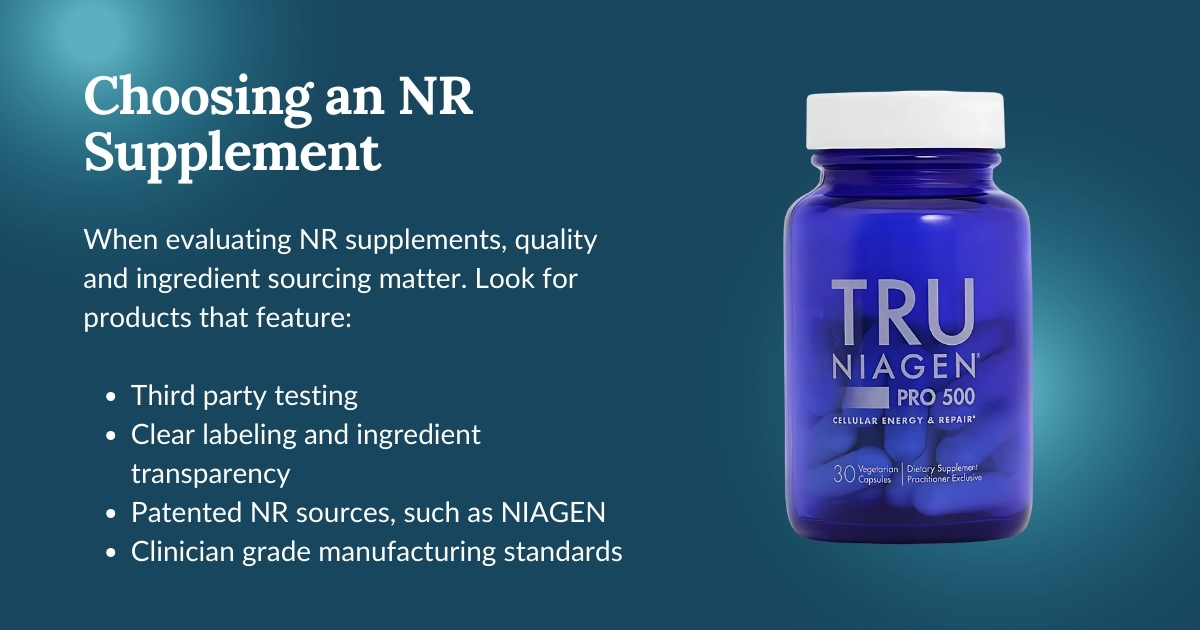
When evaluating NR supplements, quality and ingredient sourcing matter.
Look for products that feature:
- Third party testing
- Clear labeling and ingredient transparency
- Patented NR sources, such as NIAGEN
- Clinician grade manufacturing standards
NR is often included in specialized wellness programs focused on cellular energy and healthy aging. Individuals should always consult with a healthcare practitioner to determine what is appropriate for their needs.
If you are exploring NR supplements, you can view available nicotinamide riboside products in our online store.
Safety Considerations and What to Discuss With a Healthcare Provider
Published studies have found NR to be well tolerated at commonly used doses. Some individuals report mild side effects such as temporary digestive discomfort, a feeling of warmth, or flushing. These effects tend to be short lived.
People who are pregnant, breastfeeding, or managing a medical condition should speak with a healthcare provider before using NR or any dietary supplement. It is also important to review potential interactions with medications or other nutrients. A provider can help determine whether NR aligns with your overall wellness plan and how to incorporate it safely.
NR is not intended to diagnose, treat, cure, or prevent any disease.
What to Remember About Nicotinamide Riboside
Nicotinamide riboside is a clinically researched form of vitamin B3 that supports healthy NAD+ levels and cellular energy processes. Studies suggest that NR may help maintain mitochondrial function, metabolic balance, and cellular resilience, particularly as NAD+ levels naturally decline with age. Although research is ongoing, NR has emerged as a promising nutritional ingredient for individuals who want to support overall cellular health.
If you are considering nicotinamide riboside, a licensed healthcare provider can help determine whether it may be appropriate for your individual needs. You can also explore available NR supplement options through our online store.
Trademark Disclaimer
TRU NIAGEN and NIAGEN are registered trademarks of ChromaDex, Inc. These terms are used only to identify the patented ingredient referenced in this article. No affiliation, endorsement, or sponsorship by ChromaDex is implied.
*Editor’s Note: This article was originally published July 29, 2021 and has been updated December 10, 2025.
Sources:
- Nature Communications (Human NAD+ Increase Study) Martens, C. R., Denman, B. A., Mazzo, M. R., Armstrong, M. L., Reisdorph, N., McQueen, M. B., & Chonchol, M. (2018). Chronic nicotinamide riboside supplementation is well-tolerated and elevates NAD+ in healthy middle-aged and older adults. Nature Communications, 9(1), 1286. https://doi.org/10.1038/s41467-018-03421-7
- PLOS ONE (NAD+ Metabolite Increase Study) Airhart, S. E., Shireman, L. M., Risler, L. J., Anderson, P. N., Gowda, G. A. N., Raftery, D., & Sweetwyne, M. T. (2017). An open-label, non-randomized study of the pharmacokinetics of nicotinamide riboside in healthy volunteers. PLOS ONE, 12(2), e0186459. https://doi.org/10.1371/journal.pone.0186459
- Cell Reports (Skeletal Muscle NR Metabolome Study) Elhassan, Y. S., Kluckova, K., Fletcher, R. S., Schmidt, M. S., Garten, A., Doig, C. L., … & Sinclair, D. A. (2019). Nicotinamide riboside augments the human skeletal muscle NAD+ metabolome and induces transcriptomic and anti-inflammatory signatures in aged humans. Cell Reports, 28(7), 1717–1728. https://doi.org/10.1016/j.celrep.2019.07.043
- Nature Communications (Bioavailability Study) Trammell, S. A. J., Schmidt, M. S., Weidemann, B. J., Redpath, P., Jaksch, F., Dellinger, R. W., … & Brenner, C. (2016). Nicotinamide riboside is uniquely and orally bioavailable in mice and humans. Nature Communications, 7, 12948. https://doi.org/10.1038/ncomms12948
- Cell Metabolism (NAD+ and Aging Review Article) Imai, S., & Guarente, L. (2014). NAD+ and sirtuins in aging and disease. Cell Metabolism, 20(4), 462-471. https://doi.org/10.1016/j.cmet.2014.08.005
- Journal of Clinical Investigation (NAD+ Biology Review) Verdin, E. (2015). NAD+ in aging, metabolism, and neurodegeneration. Journal of Clinical Investigation, 125(3), 1083–1091. https://doi.org/10.1172/JCI78688
- Annual Review of Nutrition (General Vitamin B3/NR Context) Bogan, K. L., & Brenner, C. (2008). Nicotinic acid, nicotinamide, and nicotinamide riboside: A molecular evaluation of vitamin B3 nutritional biology. Annual Review of Nutrition, 28, 115–130. https://doi.org/10.1146/annurev.nutr.28.061807.155443
Compounding Pharmacy of America is committed to delivering reliable, accurate, and actionable health information to empower you on your wellness journey. Our content is created and reviewed by a dedicated team of professionals, including experienced writers and licensed healthcare experts.
Learn More About Compounding Pharmacy of America Editorial Team






 Subscribe to Our Newsletter